


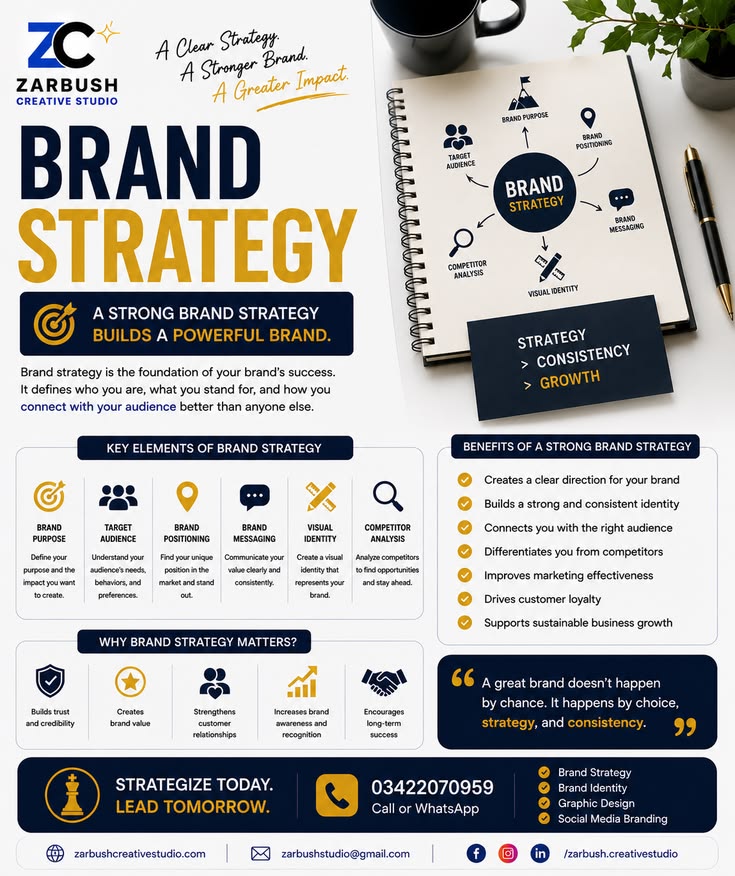
Long-term business growth depends on more than offering quality products or services; it also requires a clear brand strategy that helps customers understand, recognise, and trust a business. A strong brand creates a meaningful connection with its target audience while communicating the values and benefits that make the company different from its competitors. Through consistent messaging, thoughtful positioning, and a well-defined identity, businesses can establish a stronger presence in their markets. An effective brand strategy also provides direction for marketing activities, customer engagement, and future expansion. By investing in a structured approach to branding, businesses can build a solid foundation for sustainable growth and lasting customer relationships.
Establishing a Clear Brand Purpose and Market Position
A successful brand strategy begins with a clear understanding of what a business stands for and the value it provides to customers. Defining the company’s purpose, mission, values, and long-term objectives helps establish a consistent direction for business decisions. These foundations guide how the brand communicates, presents its products or services, and responds to customer expectations. Businesses that understand their unique strengths are better positioned to explain why their offerings matter in a competitive marketplace. A clear brand purpose also helps employees and stakeholders work towards shared goals, creating greater alignment throughout the organisation.
Market positioning is equally important when building a brand that supports long-term growth. Businesses need to identify their target audience, understand customer priorities, and determine how their offerings differ from competing alternatives. This process may involve researching market trends, reviewing competitor messaging, and identifying gaps that the business can address. By developing a distinctive value proposition, a company can communicate its benefits in a way that resonates with the people most likely to become customers. A well-positioned brand is easier to understand and remember, helping the business attract suitable customers and establish a more recognisable presence within its industry.

Building Brand Recognition Through Consistent Communication
Consistent communication plays a major role in helping businesses develop a recognisable and trustworthy brand. Customers may encounter a company through its website, social media profiles, email campaigns, advertisements, or printed materials. When these channels communicate a consistent message and reflect the same brand personality, they create a more unified impression. A clear visual identity, including colours, typography, imagery, and logo usage, further strengthens recognition across different platforms. Over time, repeated exposure to a consistent brand can make it easier for customers to identify the business and associate it with particular qualities or benefits.
A strong communication strategy also ensures that a business speaks to its audience in a relevant and engaging way. Establishing a recognisable tone of voice helps maintain consistency while allowing the brand to communicate naturally across different channels. Marketing messages should reflect the company’s values and explain how its products or services address genuine customer needs. Businesses can support this approach by creating brand guidelines that outline preferred messaging, visual standards, and communication principles. These guidelines help marketing teams, designers, and external partners maintain a unified identity as campaigns and business activities expand. Consistency does not mean repeating identical content everywhere; it means ensuring that every communication supports the same overall brand promise.
Strengthening Customer Trust and Long-Term Loyalty
Customer trust is one of the most valuable outcomes of an effective brand strategy. People are more likely to continue engaging with a business when its messaging matches the quality of its products, services, and customer support. A brand that consistently delivers on its promises creates confidence and reduces uncertainty during purchasing decisions. This trust can be strengthened through transparent communication, dependable service, clear pricing information, and responsive customer assistance. When customers feel that a business understands their needs and treats them fairly, they have stronger reasons to maintain an ongoing relationship with the brand.
Long-term customer loyalty can also contribute to more stable business growth. Returning customers may purchase additional products or services, recommend the business to others, and provide feedback that supports future improvements. Businesses can encourage these relationships by maintaining meaningful communication after the initial sale and responding constructively to customer concerns. Personalised offers, useful educational content, loyalty initiatives, and attentive support can all help create a more positive customer experience when they are relevant to the audience. However, loyalty should be built on genuine value rather than promotional activity alone. By combining a clear brand promise with reliable customer experiences, businesses can develop stronger relationships that support retention and positive word-of-mouth recommendations.
Aligning Brand Strategy With Marketing and Business Objectives
An effective brand strategy should work alongside a company’s broader marketing and commercial objectives. Branding establishes how a business wants to be perceived, while marketing activities help communicate that identity to potential and existing customers. When both are aligned, campaigns can support a consistent message instead of presenting disconnected ideas across different channels. Businesses should ensure that their advertising, content marketing, social media activity, and sales communications reflect the same positioning and value proposition. This alignment helps make marketing efforts more coherent and allows customers to develop a clearer understanding of the company’s offerings.
Strategic alignment also improves how businesses evaluate their marketing investments. Rather than focusing exclusively on immediate sales or short-term engagement, companies can monitor measures such as brand awareness, customer retention, qualified enquiries, conversion rates, and customer feedback. These indicators provide a broader view of how branding contributes to business performance. Regular reviews can help identify which messages resonate with the audience and which areas require improvement. Businesses can then refine their campaigns while maintaining their established brand identity. By connecting brand strategy with measurable objectives, organisations can make more informed decisions about marketing resources and create a clearer path towards sustainable growth.
Adapting Brand Strategy to Support Future Growth
Business environments change as customer expectations, technologies, and market conditions evolve. An effective brand strategy should therefore provide a stable foundation while allowing enough flexibility to respond to new opportunities. Businesses may need to introduce new services, reach different customer segments, expand into additional locations, or explore emerging communication channels. A well-developed brand framework helps guide these changes so that new activities remain connected to the company’s core identity. Without this direction, expansion can create inconsistent messaging and make it harder for customers to understand what the business represents.
Regular brand reviews help ensure that the strategy remains relevant without losing its distinctive qualities. Customer research, competitor analysis, market feedback, and performance data can reveal when the business needs to adjust its messaging or refine its positioning. Changes should be based on meaningful insights and long-term objectives rather than following every emerging trend. In some cases, a business may need only to update its communication methods, while in others, a more substantial repositioning may be appropriate. Clear planning helps teams understand why changes are being made and how they support the company’s wider ambitions. By balancing consistency with adaptability, businesses can strengthen their market presence and remain prepared for future growth.
Building long-term business growth through an effective brand strategy requires clear positioning, consistent communication, strong customer relationships, and ongoing evaluation. A well-defined brand helps businesses explain their value, distinguish themselves from competitors, and create experiences that encourage trust and loyalty.










Leave a comment