


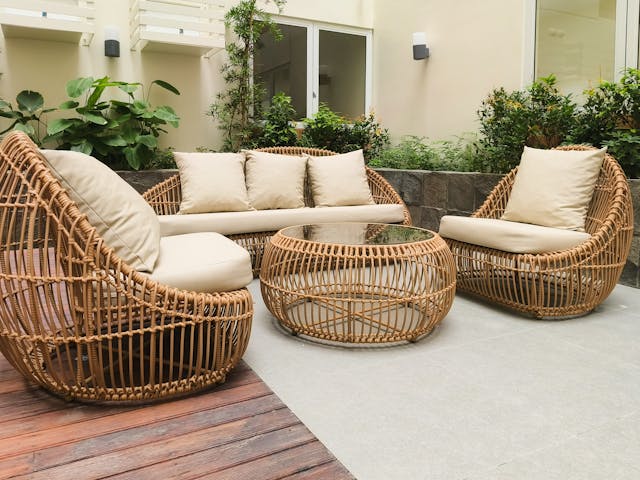
Outdoor furniture wicker remains popular throughout Australia because it fits easily into patios, balconies, pool areas and coastal homes, and remains light enough to move around. It has a woven finish that is suited to outdoor living, and many buyers assume it can withstand Australian weather. However, most problems start after the purchase. Buyers often make expensive mistakes due to a lack of understanding of material, weak structural understanding, and poor awareness of environmental exposure. This pattern is reflected in market data, durability research, and Australian climate studies.
Many Buyers Still Misunderstand Wicker Material Quality
The first big mistake is that resin quality is not equal. All synthetic wicker does not perform equally, and material performance varies significantly after long-term outdoor exposure. According to materials science reports, HDPE wicker exhibits tensile strength levels between 21–37 MPa, while lower-grade LDPE variants remain below 12–15 MPa. As a result, this represents a tensile strength gap of about 40–60% under pressure. This translates into longevity in the real world. Australian retail durability tracking shows that HDPE wicker often lasts 8–15 years, while LDPE-based products can begin to break down after 3–5 years due to fibre fatigue and surface micro-cracking. Polymer blends that lack UV stabilisers lose up to 25% of their structural integrity in the first 24 months of continuous sunlight exposure. This becomes even more significant given that Australia has higher levels of radiation.
Australian Sunlight Damages Furniture Faster Than Many Expect
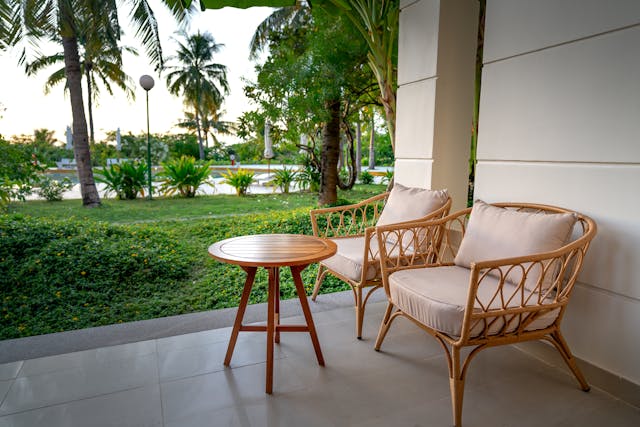
It may surprise many buyers that the Australian sun poses much more pressure on outdoor furniture. Reporting by the Bureau of Meteorology shows cities like Brisbane and Perth frequently record UV index levels of 11 or more during summer. These are at the top of the exposure scale. Even with stabilising additives, UV radiation can degrade up to 60% of the elasticity of synthetic fibres within five years. Even when furniture is shaded, cumulative UVR exposure can be doubled by reflected radiation from tiles, concrete, and nearby water surfaces. Exposure can increase by up to 50% more in coastal environments, where polymer oxidation rates are elevated by around 20–35% due to salt in the air. Consequently, this shortens product life by nearly a third.
Weak Internal Frames Cause Expensive Failures
Paying attention to the weave, but not the frame underneath, is a common mistake that shortens the lifespan of furniture before the outer material fails. Industry guidelines call for aluminium frames with wall thickness between 1.2 mm and 2.0 mm, as these will resist repeated pressure better over time. Lower-cost imports often use tubing between 0.8 mm and 1.0 mm. At loads above 100 kilograms, those thinner frames are at 45% increased risk of deformation. Retail testing also found that up to 35% of budget wicker sets failed to clearly display load ratings at all. Australian safety recommendations set minimum static load capacity at 120–150 kilograms per seat, but weaker products continue to be marketed. Over time, after 2–4 years outdoors, bending frames, loose joints, and structural failure begin to appear.
Cheap Furniture Often Costs More Over Time
Many buying decisions are driven by price even when long-term costs say otherwise. The outdoor furniture industry in Australia is now worth between AUD 2–4 billion each year, and wicker furniture costs between AUD 300 for basic items to over AUD 5,000 for high-end items. Few buyers calculate the time it takes to recoup the lower number. Yet, lifecycle cost analysis shows that an entry-level AUD 600 set with a lifespan of three years has an effective yearly cost of AUD 200. A mid-to-premium AUD 2,400 set with a lifespan of 12 years achieves the same yearly cost while offering much greater durability and fewer replacement cycles. Even with that, over 55% of buyers still choose to pay more for the lower number upfront. As a result, replacement spending continues to rise higher and higher over time.
Poor Maintenance Habits Shorten Furniture Lifespan Fast
Despite this, many outdoor furniture owners underestimate the maintenance required in Australian conditions, with material performance studies showing that synthetic wicker oxidises 25-35% faster in salt-heavy air than in inland areas. Many household’s clean outdoor furniture once every 3-6 months, when coastal environments need maintenance every 2-4 weeks to control long-term damage. UV-protective coatings can shrink product lifespan by 30-50% under poor maintenance conditions. The stress on the material builds up quietly as care routines are delayed. Studies of UV-protective coatings show product lifespan can shrink by 30-50% under poor maintenance conditions. Without regular protective treatment, fading fibres, brittle surfaces, and declining tensile resilience can start to appear in as little as 18-24 months in areas getting over 2,800 hours of sunlight a year, such as parts of Queensland.
Warranty Confusion Keeps Catching Buyers Off Guard
Misunderstandings over furniture warranties remain a problem even after delivery to the home. According to Australian retail data, mid-range wicker furniture typically has warranties ranging from 1-3 years, while premium products may include structural coverage of 5-10 years. Many buyers erroneously assume that warranties automatically cover UV fading, moisture exposure, and salt corrosion. In reality, these conditions are often excluded in a “natural wear” clause buried deep within the warranty terms. Australian Consumer Law still mandates that products are durable enough to withstand reasonable wear and tear, but many imported products only meet minimum international compliance standards rather than higher long-term durability expectations. Consumer protection reporting indicates that approximately 28 percent of complaints related to outdoor furniture involve warranty misunderstandings. This is particularly common around environmental damage exclusions and the distinction between structural coverage and appearance-related issues.



Leave a comment